Issue, August 2026
Bite-sized insights for accelerated growth.
On automating an already dysfunctional system
Ask any frontline support agent off the record how they hit their daily numbers, and you’ll hear about shortcuts. They keep sample greetings, Claude skills, saved prompts, browser extensions, copied ticket summaries, AI-generated replies, and unofficial playbooks for cases the knowledge base does not explain. Some even build their own mini-agent workflows to summarize complaints, soften replies, or decide what to escalate. And each agent is doing it privately, outside the official workflow.
On automating an already dysfunctional system
Ask any frontline support agent off the record how they hit their daily numbers, and you’ll hear about shortcuts. They keep sample greetings, Claude skills, saved prompts, browser extensions, copied ticket summaries, AI-generated replies, and unofficial playbooks for cases the knowledge base does not explain. Some even build their own mini-agent workflows to summarize complaints, soften replies, or decide what to escalate. And each agent is doing it privately, outside the official workflow.
On automating an already dysfunctional system
Ask any frontline support agent off the record how they hit their daily numbers, and you’ll hear about shortcuts. They keep sample greetings, Claude skills, saved prompts, browser extensions, copied ticket summaries, AI-generated replies, and unofficial playbooks for cases the knowledge base does not explain. Some even build their own mini-agent workflows to summarize complaints, soften replies, or decide what to escalate. And each agent is doing it privately, outside the official workflow.
Customer service functions have fallen into the trap of taking broken, high-friction processes and layering AI directly on top of them. I call this automating dysfunction, and it’s not hard to see why it happens. When leadership demands speed above all else, frontline agents adapt to survive the metric. If an unverified automated answer saves two minutes, it gets sent, even if the agent suspects it's wrong. Adding fast AI tools over an environment driven by metric survival will not fix your customer experience. If anything, it will simply speed up the cycle of silent mistakes. Automate only when you are willing to open the system up to see where agents improvise, where policies fail, where AI fills the gaps, and where company culture and leadership-imposed metrics create the wrong behavior.

Abdullah Asiri
Founder & CEO
Customer service functions have fallen into the trap of taking broken, high-friction processes and layering AI directly on top of them. I call this automating dysfunction, and it’s not hard to see why it happens. When leadership demands speed above all else, frontline agents adapt to survive the metric. If an unverified automated answer saves two minutes, it gets sent, even if the agent suspects it's wrong. Adding fast AI tools over an environment driven by metric survival will not fix your customer experience. If anything, it will simply speed up the cycle of silent mistakes. Automate only when you are willing to open the system up to see where agents improvise, where policies fail, where AI fills the gaps, and where company culture and leadership-imposed metrics create the wrong behavior.
Abdullah Asiri
Founder & CEO
In reality, we have to admit that agents aren't cutting corners. Instead, they're filling gaps systems leave wide open. Here’s what tends to happen and how to fix it:
How broken systems teach teams to hide the fix
1. The metric-survival loop
Companies have spent forever judging customer support on raw speed, mostly because counting closed tickets is the easiest route. But that backfires fast. Support agents quickly realize that spending 20 minutes to fix a problem gets them flagged for being too slow. So they adapt. They rely on shortcuts, send rushed replies, and do whatever helps them keep the numbers green.
On paper, everything looks fine. The queue is moving, the tickets are closing, and the team appears productive. But when a customer comes back later with more questions, more frustration, or a different version of the same problem, it becomes clear that the issue was moved along, not solved.
You save notes, reuse messages, or find faster ways through the process because that is what helps you keep up. That does not mean you are doing bad work. It means the process around you has gaps, and you are being asked to work around them.
Further reading → If speed is not the full story, what should you measure instead? Stop measuring responses. Measure resolution.
2. The receipt problem
Workarounds always come with a hidden cost because they completely erase transparency. Imagine a frustrated customer asking why they were promised a refund in one conversation, then told three days later that they were not eligible. If that customer asks for the receipts, workarounds mean you have absolutely no paper trail to show them.
A patched-together process cannot provide a reliable history or clear accountability for a customer case.
3. Bringing workarounds into the light
You can’t fix this by turning every unofficial shortcut into a forbidden one. Banning workarounds drives them deeper underground.
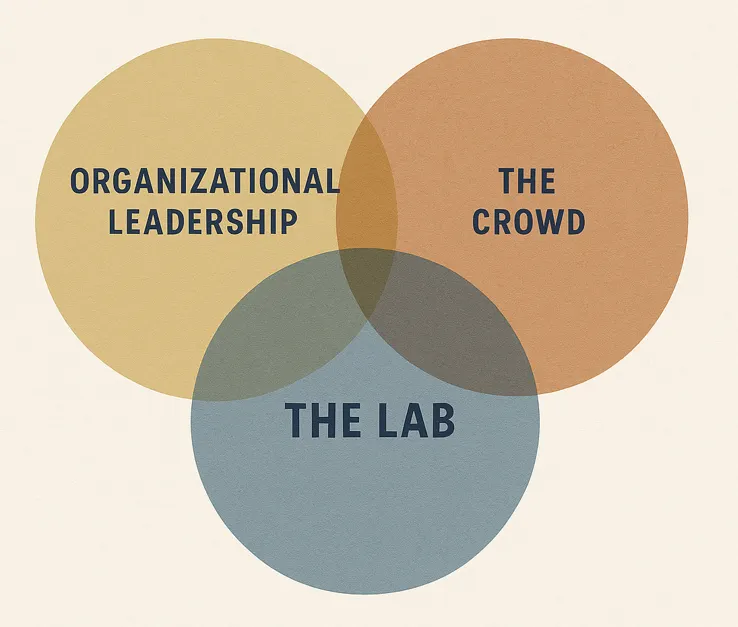
In an influential essay on how organizations absorb new AI tools, academic and writer Ethan Mollick outlined a practical framework for AI adoption. Rather than enforcing top-down software mandates, high-performing organizations align three distinct operational layers:
Layer 1 | The Leadership: Make it safe to share the shortcuts
If agents think sharing a shortcut will only mean higher targets, more pressure, or someone replacing their work, they will keep it to themselves. Leaders need to make the message clear: we are not looking for shortcuts so we can squeeze more out of people. We are looking for them because they show us where the system needs to get better.
Layer 2 | The Crowd: Get the hacks from the people already doing the work
Agents know where the system gets stuck. They know which answers are missing from the knowledge base, which steps take too many clicks, and which cases always need a workaround. If you make it safe for them to share those shortcuts, you stop treating them like rule-breakers and start treating them like the people closest to the problem.
Layer 3 | The Lab: Turn hidden fixes into better systems
Once you know which shortcuts agents rely on, the next step is to make the best ones safer and easier for everyone to use. That means checking them for privacy, accuracy, and risk, then turning them into shared workflows instead of leaving them buried in someone’s personal notes.
Try this at home
At Lucidya, we ran into the same problem internally: the knowledge existed, but it was scattered across tools, notes, records, and people’s heads.
So our engineering team built around the real friction. A six-person team mapped the repeated pain points and created seven internal AI tools over six months. The goal was not to automate people out of the process. It was to bring the right context closer, then keep humans in charge of the final call.

Further reading → For a closer look at how we built around real workflow gaps, read: How our engineers built 7 AI Tools that save thousands of hours
Make the customer story easy to see
Even the most open company culture will default back to fragmented workarounds if the underlying workspace is disconnected.
When agents are forced to jump between separate browser tabs to manage reviews, direct messages, social comments, and email threads, context breaks down naturally. Information gets lost in the handoff between channels, forcing agents to improvise shortcuts just to keep up.
Ready to make the customer story easier to see? Save your seat for the upcoming masterclass session:

Case in point: The banking sector |
Always have the receipts
In banking, for example, transparency cannot be an afterthought. If a customer gets one answer today and a different answer tomorrow, the team needs to see how that happened: what the agent checked, what AI suggested, what shortcut was used, and what changed along the way.
That requires a culture willing to let its walls down. The walls between what leadership sees and what agents live through. The walls between approved processes and private fixes. The walls between AI-generated confidence and real accountability. Not every team will be comfortable with that level of visibility. But if you are willing to face it, transparency stops being a burden and becomes the fastest path to fixing what keeps breaking.
Industry lens → See how this plays out when trust and accountability are non-negotiable: A better approach to customer response management in banking
In reality, we have to admit that agents aren't cutting corners. Instead, they're filling gaps systems leave wide open. Here’s what tends to happen and how to fix it:
How broken systems teach teams to hide the fix
1. The metric-survival loop
Companies have spent forever judging customer support on raw speed, mostly because counting closed tickets is the easiest route. But that backfires fast. Support agents quickly realize that spending 20 minutes to fix a problem gets them flagged for being too slow. So they adapt. They rely on shortcuts, send rushed replies, and do whatever helps them keep the numbers green.
On paper, everything looks fine. The queue is moving, the tickets are closing, and the team appears productive. But when a customer comes back later with more questions, more frustration, or a different version of the same problem, it becomes clear that the issue was moved along, not solved.
You save notes, reuse messages, or find faster ways through the process because that is what helps you keep up. That does not mean you are doing bad work. It means the process around you has gaps, and you are being asked to work around them.
Further reading → If speed is not the full story, what should you measure instead? Stop measuring responses. Measure resolution.
2. The receipt problem
Workarounds always come with a hidden cost because they completely erase transparency. Imagine a frustrated customer asking why they were promised a refund in one conversation, then told three days later that they were not eligible. If that customer asks for the receipts, workarounds mean you have absolutely no paper trail to show them.
A patched-together process cannot provide a reliable history or clear accountability for a customer case.
3. Bringing workarounds into the light
You can’t fix this by turning every unofficial shortcut into a forbidden one. Banning workarounds drives them deeper underground.
In an influential essay on how organizations absorb new AI tools, academic and writer Ethan Mollick outlined a practical framework for AI adoption. Rather than enforcing top-down software mandates, high-performing organizations align three distinct operational layers:
Layer 1 | The Leadership: Make it safe to share the shortcuts
If agents think sharing a shortcut will only mean higher targets, more pressure, or someone replacing their work, they will keep it to themselves. Leaders need to make the message clear: we are not looking for shortcuts so we can squeeze more out of people. We are looking for them because they show us where the system needs to get better.
Layer 2 | The Crowd: Get the hacks from the people already doing the work
Agents know where the system gets stuck. They know which answers are missing from the knowledge base, which steps take too many clicks, and which cases always need a workaround. If you make it safe for them to share those shortcuts, you stop treating them like rule-breakers and start treating them like the people closest to the problem.
Layer 3 | The Lab: Turn hidden fixes into better systems
Once you know which shortcuts agents rely on, the next step is to make the best ones safer and easier for everyone to use. That means checking them for privacy, accuracy, and risk, then turning them into shared workflows instead of leaving them buried in someone’s personal notes.
Try this at home
At Lucidya, we ran into the same problem internally: the knowledge existed, but it was scattered across tools, notes, records, and people’s heads.
So our engineering team built around the real friction. A six-person team mapped the repeated pain points and created seven internal AI tools over six months. The goal was not to automate people out of the process. It was to bring the right context closer, then keep humans in charge of the final call.
Further reading → For a closer look at how we built around real workflow gaps, read: How our engineers built 7 AI Tools that save thousands of hours
Make the customer story easy to see
Even the most open company culture will default back to fragmented workarounds if the underlying workspace is disconnected.
When agents are forced to jump between separate browser tabs to manage reviews, direct messages, social comments, and email threads, context breaks down naturally. Information gets lost in the handoff between channels, forcing agents to improvise shortcuts just to keep up.
Ready to make the customer story easier to see? Save your seat for the upcoming masterclass session:
Case in point: The banking sector |
Always have the receipts
In banking, for example, transparency cannot be an afterthought. If a customer gets one answer today and a different answer tomorrow, the team needs to see how that happened: what the agent checked, what AI suggested, what shortcut was used, and what changed along the way.
That requires a culture willing to let its walls down. The walls between what leadership sees and what agents live through. The walls between approved processes and private fixes. The walls between AI-generated confidence and real accountability. Not every team will be comfortable with that level of visibility. But if you are willing to face it, transparency stops being a burden and becomes the fastest path to fixing what keeps breaking.
Industry lens → See how this plays out when trust and accountability are non-negotiable: A better approach to customer response management in banking
In reality, we have to admit that agents aren't cutting corners. Instead, they're filling gaps systems leave wide open. Here’s what tends to happen and how to fix it:
How broken systems teach teams to hide the fix
1. The metric-survival loop
Companies have spent forever judging customer support on raw speed, mostly because counting closed tickets is the easiest route. But that backfires fast. Support agents quickly realize that spending 20 minutes to fix a problem gets them flagged for being too slow. So they adapt. They rely on shortcuts, send rushed replies, and do whatever helps them keep the numbers green.
On paper, everything looks fine. The queue is moving, the tickets are closing, and the team appears productive. But when a customer comes back later with more questions, more frustration, or a different version of the same problem, it becomes clear that the issue was moved along, not solved.
You save notes, reuse messages, or find faster ways through the process because that is what helps you keep up. That does not mean you are doing bad work. It means the process around you has gaps, and you are being asked to work around them.
Further reading → If speed is not the full story, what should you measure instead? Stop measuring responses. Measure resolution.
2. The receipt problem
Workarounds always come with a hidden cost because they completely erase transparency. Imagine a frustrated customer asking why they were promised a refund in one conversation, then told three days later that they were not eligible. If that customer asks for the receipts, workarounds mean you have absolutely no paper trail to show them.
A patched-together process cannot provide a reliable history or clear accountability for a customer case.
3. Bringing workarounds into the light
You can’t fix this by turning every unofficial shortcut into a forbidden one. Banning workarounds drives them deeper underground.
In an influential essay on how organizations absorb new AI tools, academic and writer Ethan Mollick outlined a practical framework for AI adoption. Rather than enforcing top-down software mandates, high-performing organizations align three distinct operational layers:
Layer 1 | The Leadership: Make it safe to share the shortcuts
If agents think sharing a shortcut will only mean higher targets, more pressure, or someone replacing their work, they will keep it to themselves. Leaders need to make the message clear: we are not looking for shortcuts so we can squeeze more out of people. We are looking for them because they show us where the system needs to get better.
Layer 2 | The Crowd: Get the hacks from the people already doing the work
Agents know where the system gets stuck. They know which answers are missing from the knowledge base, which steps take too many clicks, and which cases always need a workaround. If you make it safe for them to share those shortcuts, you stop treating them like rule-breakers and start treating them like the people closest to the problem.
Layer 3 | The Lab: Turn hidden fixes into better systems
Once you know which shortcuts agents rely on, the next step is to make the best ones safer and easier for everyone to use. That means checking them for privacy, accuracy, and risk, then turning them into shared workflows instead of leaving them buried in someone’s personal notes.
Try this at home
At Lucidya, we ran into the same problem internally: the knowledge existed, but it was scattered across tools, notes, records, and people’s heads.
So our engineering team built around the real friction. A six-person team mapped the repeated pain points and created seven internal AI tools over six months. The goal was not to automate people out of the process. It was to bring the right context closer, then keep humans in charge of the final call.
Further reading → For a closer look at how we built around real workflow gaps, read: How our engineers built 7 AI Tools that save thousands of hours
Make the customer story easy to see
Even the most open company culture will default back to fragmented workarounds if the underlying workspace is disconnected.
When agents are forced to jump between separate browser tabs to manage reviews, direct messages, social comments, and email threads, context breaks down naturally. Information gets lost in the handoff between channels, forcing agents to improvise shortcuts just to keep up.
Ready to make the customer story easier to see? Save your seat for the upcoming masterclass session:
Case in point: The banking sector |
Always have the receipts
In banking, for example, transparency cannot be an afterthought. If a customer gets one answer today and a different answer tomorrow, the team needs to see how that happened: what the agent checked, what AI suggested, what shortcut was used, and what changed along the way.
That requires a culture willing to let its walls down. The walls between what leadership sees and what agents live through. The walls between approved processes and private fixes. The walls between AI-generated confidence and real accountability. Not every team will be comfortable with that level of visibility. But if you are willing to face it, transparency stops being a burden and becomes the fastest path to fixing what keeps breaking.
Industry lens → See how this plays out when trust and accountability are non-negotiable: A better approach to customer response management in banking
Lucidya, the latest
Lucidya, the latest
Lucidya, the latest
All
What's new
Brain boosters
AI perspectives
Events
Lucidly speaking








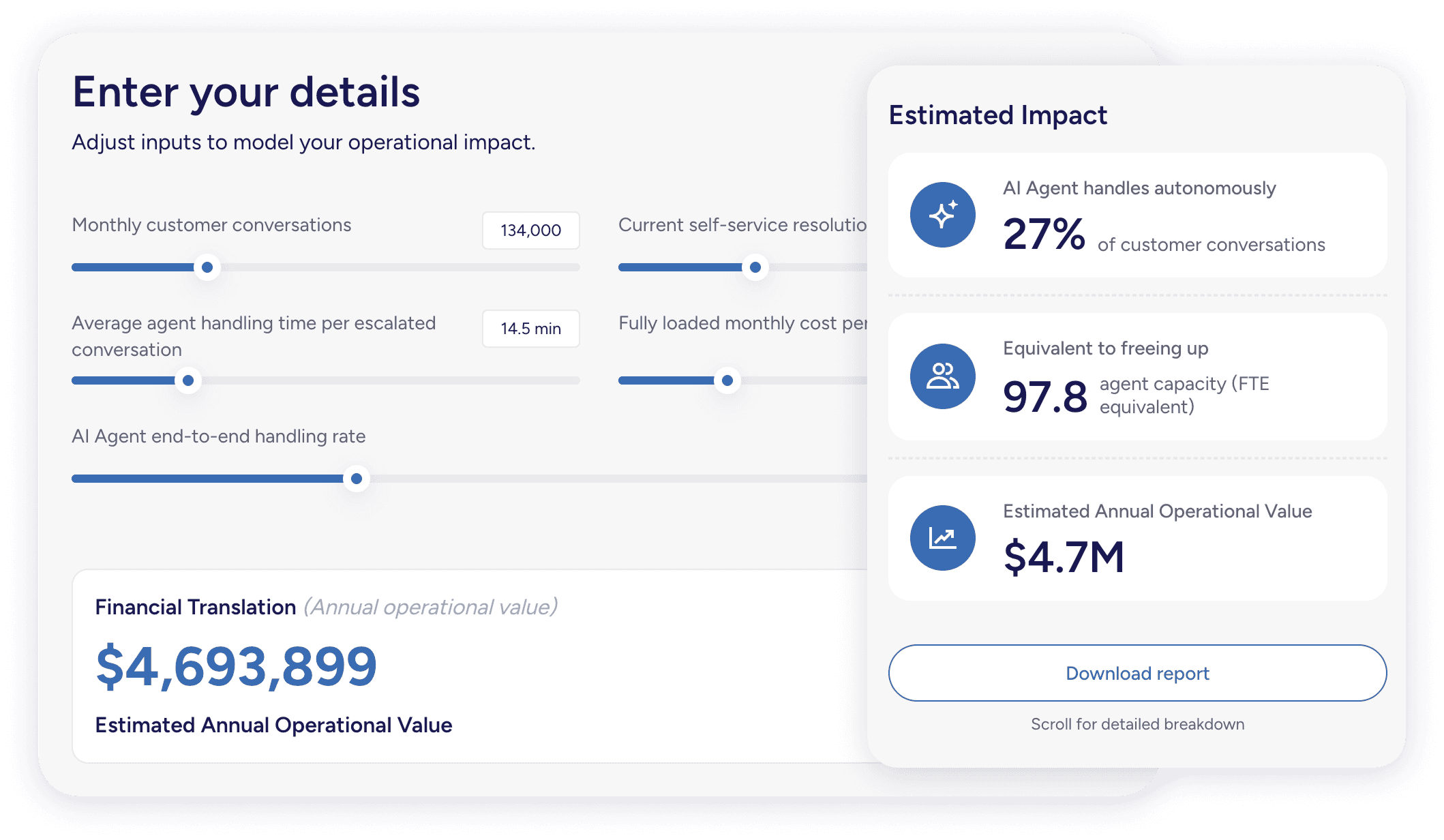
Replace manual support with AI Agents
AI Agent customers see ROI from week one, and the curve only gets steeper as AI Agent learns from every conversation.
AI Agent customers see ROI from week one, and the curve only gets steeper as AI Agent learns from every conversation.
Explore our previous editions


Share this edition of CX Bites: